
Evander Strategy’s Startup Development Crash Course

So, you’ve decided to design a new business under time pressure.
Maybe you’re at a Hackathon or in a startup program.
Maybe you left a university assignment to the last minute and need a killer idea.
Maybe you’ve had a moment of inspiration and want to generate massive momentum.
Either way, welcome to this Crash Course that will explain and shorten the design process, helping you find, test and pitch good startup ideas.
We can’t tell you what to build, but this guide will give you a serious advantage over the other teams, and reduce the uncertainty of rapid idea generation.
Let’s hear the good and bad news, then we’ll quickly walk through the steps:
Good news: this process can be learned and performed by almost anyone
Bad news: your past success and qualifications do not guarantee success tomorrow
Good news: good ideas can come from anywhere
Good news: even if you’re not inspired, you can create good ideas through hard work
Bad news: nobody can tell you exactly how long this will take
Good news: there is a lot of good advice, tools and frameworks attempting to explain the innovation process
Bad news: none of them are reliable, foolproof recipes for startups
Good news: you can skip through to find the frameworks you like, and leave the ones you don’t
Bad news: these frameworks name a process with helpful language, you still need to do the hard work yourself
Bad news: entrepreneurs need a lot of skill, wisdom and patience
Good news: these can come from anywhere, not just universities; he school of life can be more than enough
Good news: working with a team gives you more brainpower, creativity and insights
Bad news: working with a team requires negotiation, patience and sitting with uncertainty for a while
Good news: each part of the process is straightforward and has clear step by step instructions
Bad news: some parts will need to be repeated, especially when you find out customers aren’t who you thought they were, or that your prototypes aren’t working as hoped
Good news: repeating steps the second or third time will be much quicker and easier than the first time
Bad news: this process is murky, vague and full of highs and lows
Good news: this process is interesting and time will pass quickly
Bad news: there will be times where you want to give up and regret starting
Good news: and now you have something in common with every entrepreneur in history
Bad news: there is no one single right way of designing and building a startup
Good news: you can find the approach that works for you and your circumstances
Bad news: you might walk away from this process in a few days with nothing
Good news: you can take risks and learn a tonne, with not much at stake
In the spirit of a Crash Course, here’s the whole thing summed up in two minutes:
A 30 second overview of startups
A startup is a new business that is designed to grow quickly.
If it’s not new, or if it’s designed to be small, that’s great, but probably not a startup.
Equally, startup does not mean tech or “billion-dollar valuation”, but those things are often associated with growth.
Startups are hungry – they are looking for a deep pool of motivated customers who are saying “shut up and take my money”.
We want to find, understand, serve and retain these customers in a profitable way, and if something isn’t working, we’ll change it.
We can pick a niche, but eventually we want to delight a lot of people.
A 30 second overview of the process
Startups grow by developing empathy for their customers, making products and services that they will hopefully love, then testing these ideas out in the market.
We probably are right about some things and wrong about others, so we’ll make adjustments and try again.
We do this as many times as necessary until we have a great idea and an enthusiastic customer base.
Once we have that, we can start to grow, learning and improving along the way.
It’s better to make pivots while the idea is in development, because change is cheap, then we can grow once the idea is proven.
A 30 second overview of what we have at the end
At the end of this rapid process, you should have a compelling pitch and an action plan.
The pitch should explain the opportunity you see, the insights that you’ve learned, the evidence that supports your thinking, a way it can be sustainable and what you’d do next if you continued with its development.
The aim is to be interesting, and show your progress.
Luckily, failed experiments give you credibility, they show how you’ve responded to feedback and make your new ideas look even better.
You will get questions about your process and options from the future, and you can select which bits of advice to take on board.
A 30 second overview of what counts as a good business concept
IDEO describe three “lenses of innovation”, or ways of assessing an idea:
Desirability – who wants this and why, and how will they hear about it?
Feasibility – how do we give people what they want, and without burning out?
Viability – How does money flow in and out, and do we make a surplus?
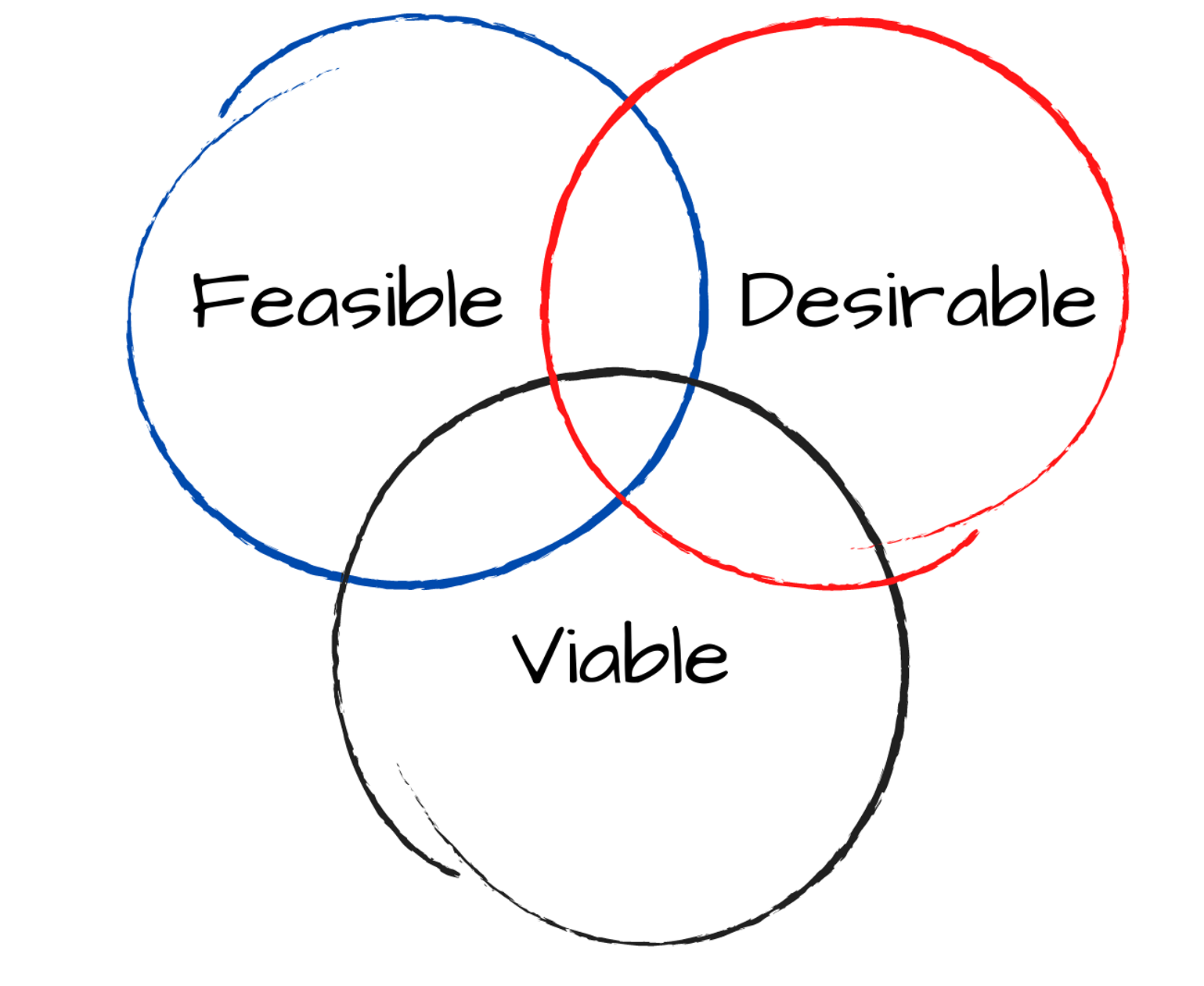
These are often drawn as a Venn diagram, and a good business needs to sit in the middle.
Missing on any of these criteria becomes a huge issue:
If it’s not desirable, it’s impossible to grow and will generate no traction
If it’s not feasible, we end up under-delivering or dependent on one key person
If it’s not viable, we head towards bankruptcy and burn through our savings
Still keen?
Great!
Let’s get started…
The Design Process
We are going to go the long way around.
It would seem faster to simply start with a killer product idea and make plans for global domination.
But that’s a long shot.
It does happen on occasion, taking a breakthrough innovation and creating demand for a product, but it’s very hard to get right; there’s a lot of luck involved and it might take years of patience for the market to be ready.
Instead, we are going to follow the design process - starting with problems instead of solutions, and understanding people so that we can serve them, rather than forcing or tricking customers into buying what we’d like to make.
It will take us longer at first, but we’ll move quickly; getting validation and better insights as we go, so that we pitch with confidence at the end.
That’s because we want to avoid the number one thing that kills startups: solving an irrelevant problem.
It’s not that competitors steal your ideas or that your costs are too high, it’s that the market hears your offers, shrugs and says “meh”, and goes about the rest of their lives.
One of the best visualisations of this process is the Double Loop:
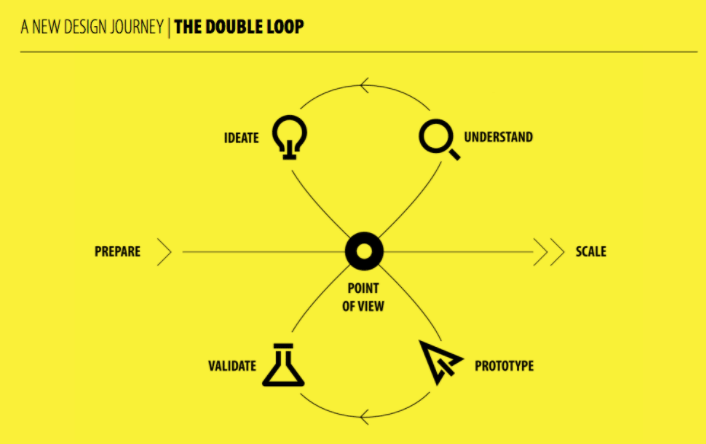
designabetterbusiness.com
You can see four distinct steps, starting from the top right and moving left:
Understanding customers, gathering insights and gaining empathy
Ideating for brilliant products and services that customers will love and buy
Prototyping our concepts, checking our assumptions and spotting new variations for further development
Validating our ideas, learning from good and bad news, and identifying options for the next version
Each step enhances our “point of view”, as we get clearer and more creative in our ideas for what this startup could become.
As we mentioned earlier, each step is very do-able, but we will likely go through the loops more than once, and that’s a good thing.
You can afford to be wrong right now, it’s far more costly once you’ve committed to a particular business model, so we want to learn and get stronger while it is cheap to fix.
People often celebrate investment and raising money, but investment does not “fix” a business, it expands it.
Investing in a good business model can make a great, thriving company.
Investing in a bad business model will make a big, unprofitable company.
That’s because you can’t buy good customers and you can’t force people to shop with you, so growing the wrong idea sets fire to your money.
How Will We Know We Have The Right Idea?
There are three checkpoints along the way, which we call the three types of “fit”:
Customer-Problem Fit: you’re convinced that there are a lots of real customers out there with real interest or demand.
Product-Solution Fit: you’re convinced that you have a way of solving their problems with your products or services, delivering on your promises.
Product-Market Fit: you’re convinced that customers consistently see your offers and say “shut up and take my money”.
If you’re in a Hackathon or university program, it’s realistic to get evidence to support the first two; a group of motivated customers and a possible solution to their problems.
You won’t get Product-Market Fit in 1-2 days, and that’s fine so long as you can describe what you would do next if you were to make more progress.
For the purposes of your work, the best one to get right is Customer-Problem Fit.
Without that, all of your other projections or claims are hollow.
Good Principles For Making The Work Easier
This work takes energy, creativity and bravery, but there are ways of making the process feel smoother.
Here are some helpful principles before you get started:
Good ideas survive competition – don’t be afraid to entertain lots of options, knowing that the process will squash the bad ones and surprise you with the strong ones
Evidence beats guesses – gut feelings are helpful but aren’t enough, we need to back up our suspicions early and cheaply
Say “I don’t know but I’ll find out” – don’t pretend you know everything, and make a plan to get better information
Start with “we can if…” – think about what it would take for you to feel good about something, rather than thinking about all the reasons why it probably won’t work
The opposite of a good idea can also be a good idea – there’s no single way of doing things, so don’t look for perfection or rule something out because the opposite succeeded elsewhere
When in doubt, ask for help – no one builds a successful business alone, there’s lots of support around you but we’re not mind readers
We assume the best in each other – nobody is here to insult or undermine you, and we assume that about you too, which makes for a lovely peer environment that makes us all stronger
The aim of this work is to learn about the process, learn about yourself, and meet good people who might be good collaborators in the future.
Your facilitators, mentors and judges are not the pope of startups - we don’t hold the singular correct answer, you don’t need our blessing, but we can help you stay on track, get unstuck and ask useful questions.
Starting With The End In Mind
As we mentioned earlier, the number one issue for new businesses is irrelevance, so let’s specifically work to avoid that.
We are looking for problems in need of a startup.
This is when we have:
A decent number of customers
With a real need or want
Who are ready to take action
Are willing and able to pay
And aren’t content with what they have today
There are two good starting points for finding good problems – Macro and Micro.
Macro trends and observations are often well known and maybe cliché, like “people have too much screen time” or “house in our city are unaffordable” or “people in this particular demographic don’t eat enough nutritious food”.
Micro trends and observations are much closer to home, perhaps because they affect you, your friends or family.
e.g. you had a hard time buying something for your home and said “there must be a better way”, or your cousin had an issue in their job that required a creative solution, or your colleague went on parental leave and struggled with a certain logistical headache.
Yee Tong said “Every time you hear people bitching, they are identifying a market need”.
Both perspectives are valid and useful, and it helps to see a situation through each of these lenses: can I picture who has this need/interest, and how many other people out there are in the same situation?
An idea is not “obvious” or “worse” because you had it.
Paul Graham said “One sign of a startup idea is the word "shouldn't."
If you find yourself saying "users shouldn't have to do x" or "we shouldn't have had to build y," it's often a sign of a missing startup.
And if you're the one saying "shouldn't," that you would be a good person to start it.”
We want problems that are the right size – they aren’t only affecting a handful of people in one neighbourhood, but they’re also no so impossible that a startup can’t make a difference.
i.e. fixing a roundabout on your street might be too small, time travel or flying cars might be too complex.
You need to have proximity and permission to go digging for more clues.
If you can’t find customers to talk to, or you aren’t close enough to a particular problem to have an informed, sophisticated perspective, pick another starting point.
Customers and users will need to be involved in each step of the process, and if you’re too far away from them, you won’t get their honest insights.
How To Pick A Team
There are lots of ways you can pick a team, but in this case there’s two approaches I recommend.
The first, and probably best, way is to unite around a shared interest in a particular problem or industry.
i.e. we are all vegan, or we are all coders, or we all work in construction, or we all have a passion for social justice.
The way to find these out is through brainstorming and reading each other’s ideas.
Grab post-its and write you own answer to this prompt, then stick them on a wall:
“I can’t believe it’s 2026, and we still…”
These are great for identifying different themes as well as crossovers – areas that you all find interesting.
It works because you are agreeing on a starting point for a real problem, rather than dreaming up a perfect solution to an undefined problem.
The second approach to team formation is to sit with people you feel comfortable talking to.
That might sound obvious, but sometimes programs try to avoid this, and push you out of your comfort zone.
In the long run that’s probably better, but for a Hackathon or design sprint, working with people you know can save a lot of nervousness and posturing.
I don’t like teams of more than four.
Sometimes there’s a valid reason for it, but 5+ often creates a scenario with two leaders and three passengers, which only compounds as the team gets bigger.
Exploring The Problem (Without Rushing To Conclusions)
The aim of this stage is to get lots of information on the table, to spot themes and opportunities for deeper exploration, without skipping ahead to design solutions.
We need to earn the right to design solutions, and that comes from genuinely understanding the consequences and causes of today’s problems.
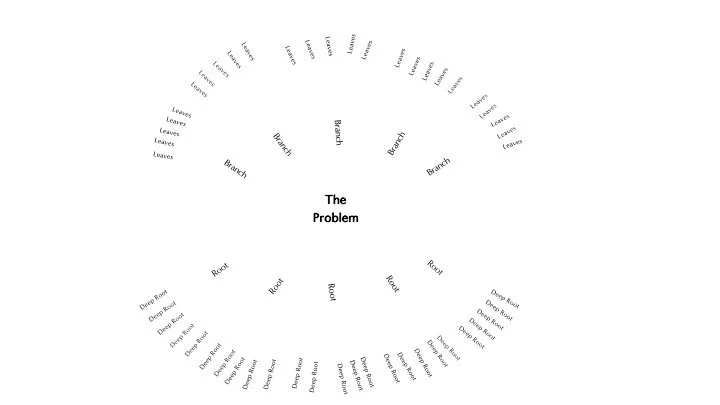
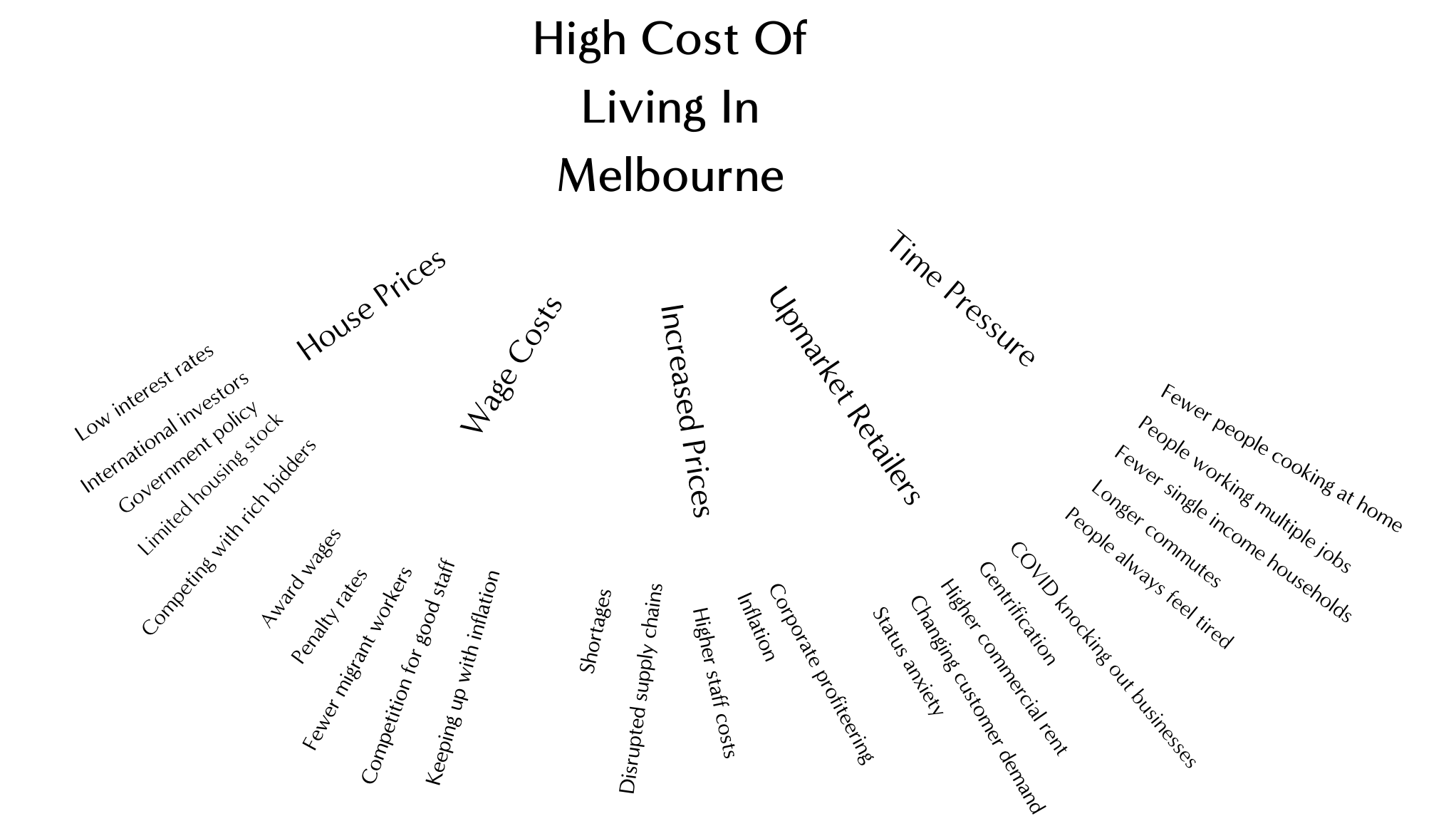
One of our favourite ways of thinking about this is with a Problem Tree.
It draws a problem like a big tree trunk – solid, obvious, hard to move.
The tree trunk then stems out into branches and leaves, these are like the consequences of the problem.
If we take a chainsaw to the tree, it will vanish…for a while.
But the tree is being fed by its roots, and so are our problems.
These root causes are what allowed the problem to thrive, so if we don’t address them, the problem will re-grow.
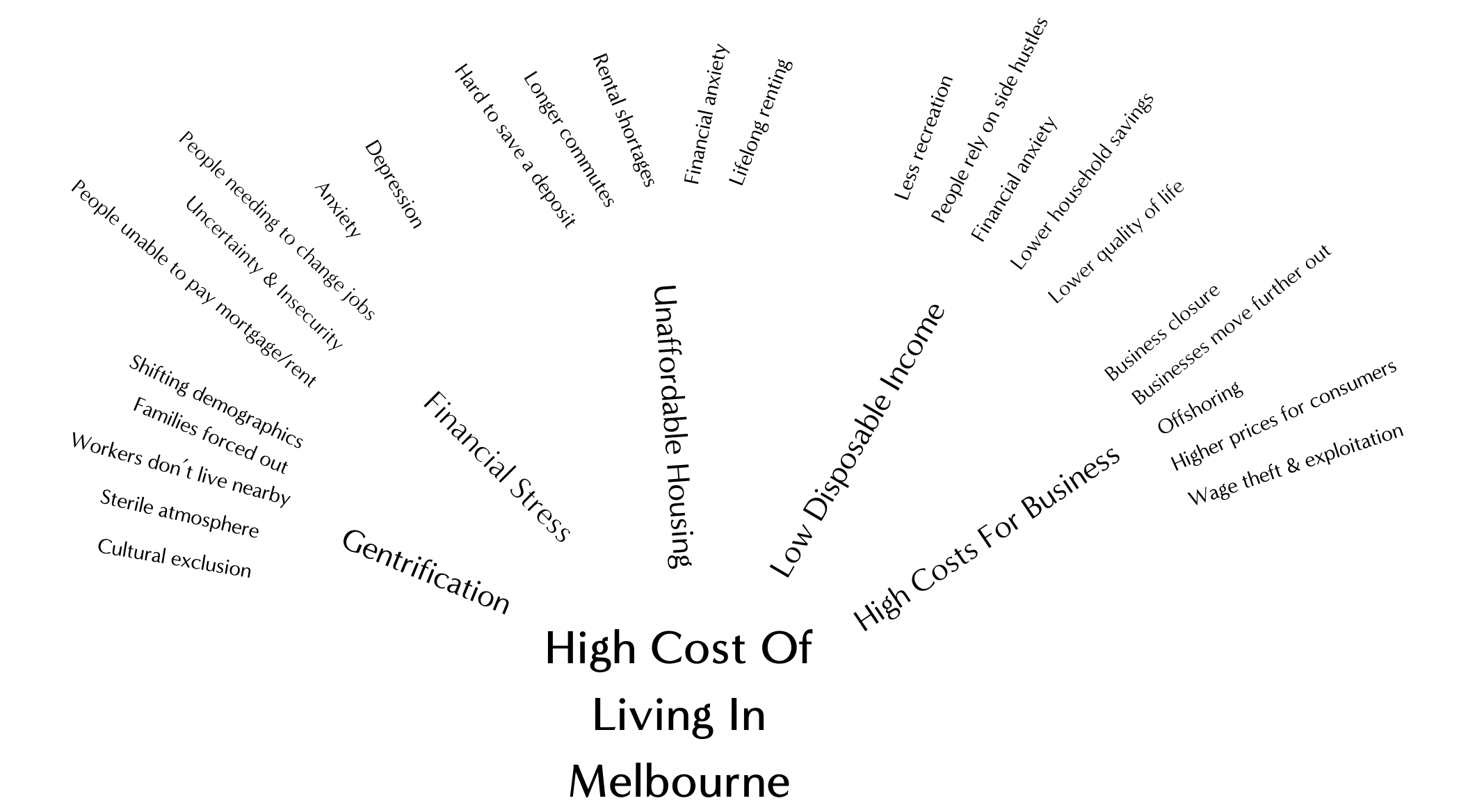
The best thing to do now is to map your chosen problem like a tree.
Start with the trunk – the obvious part, then move to the branches and leaves, or consequences and effects.
Researching these helps you understand the depth, severity and history of the problem, as well as what has been tried in the past to resolve it.
Then, and only then, can we map out the root causes, the forces keeping the problem well-fed.
We suggest trying to map out 15-20 root causes for your chosen problem, then vote on a top 3 for your team to research in more detail.
Who Else?
You’re probably not the only one focused on this problem tree, and that’s a good thing, but there’s not much use in re-creating something that already exists, let alone something that exists and isn’t really working.
For this reason, please do some digging to see who else shares your passion, what they have attempted, what’s working and what’s still missing.
Sometimes people get disheartened to learn about competitors, but treat them like allies instead – what are they doing to combat a shared problem?
The problem still exists, so they haven’t eliminated a need, what can you learn from their work?
This will help you attack the problem tree from a new angle, and with new energy.
Creating How Might We Questions
Once you’ve narrowed down a top 2-3 root causes, it’s time to turn them into “How might we…” questions.
These are great because they sum up a problem in a way that invites conversation, without pre-supposing a singular answer.
e.g. how might we make fresh produce more affordable for families in rural areas?
How might we create welcoming spaces on campus for international students?
How might we halve the amount of plastics used per person per day?
A good question invites informed opinions, and gives clarity and energy to your project.
You’ll know it when you’ve got it.
Identifying Relevant Customers
What we’re looking for now is a group of potential customers who are either affected by a similar problem, or who take an interest in the problem.
i.e. who else is standing near this Problem Tree, and what do they care about?
What do they need to buy in their work/lives?
Who has an incentive to address the sorts of problems we’ve been mapping out?
What are they shopping for right now?
Some of these people will be Customers, which we define as people who:
Have a motivation
Have the authority/power to take action
Are willing and able to spend money
These can be individuals, groups, corporations or government departments, but in each case, they have a budget they’re willing to spend.
If they don’t make a choice or can’t/won’t pay, then they may be an end user or beneficiary of the work.
That means we need to understand them and their preferences, but they’re not the customer base we need to entice as a startup.
We can describe customers in a few helpful ways:
Their demographics (e.g. age, location, occupation, height, physical needs, income, etc)
Their psychographics (e.g. attitudes, worldviews, beliefs, interests, affiliations)
Level of sophistication (i.e. have they bought this in the past, do they know what they are looking for?)
Budget (i.e. whose money they’re spending, their parameters and what they’ve spent in the past
There are a lot of empathy mapping tools available online that might provide you with some prompts, nudges and terminology.
Have a look, if they interest you then try filling them in.
Our suspicion is that these are overkill for short design sprints, but if they help you identify and understand your customers in more detail, great.

Jobs To Be Done
These customers, usually, are not walking around looking for new businesses to hand their money to.
Their cash is not burning a hole in their pocket.
Instead, they have their own “to-do lists” in their head, which we refer to as “Jobs To Be Done”.
Some of these are functional, but a surprising amount of them are social or emotional Jobs To Be Done.
e.g. let’s say you’re shopping for a car:
Functional Jobs To Be Done include getting a certain number of passengers from A to B, wheels that can survive your specific terrain, and that fits in your garage.
Social Jobs To Be Done include what it says to your colleagues, customers or even romantic prospects.
Emotional Jobs To Be Done include how you feel when you see it and drive it, the wind through your hair, what it says about you and your success, etc.
Very few people admit to these last two categories, but they affect what makes and models are even considered in the first place.
More importantly, the vast, vast majority of people are not currently shopping for a car right now.
They are content with what they have, and are not in the market or thinking about cars until something changes, called a “triggering event”.
Their opinions are nowhere near as informative as someone who is in the market right now.
High Value Jobs
Customers don’t care about every job equally.
Some needs/wants are like a vitamin – a nice-to-have, a bonus, but not urgent.
Some needs/wants are like painkillers – very important to customers who will evaluate their options before picking something.
Some needs/wants are like oxygen – essential for their life, and there’s no way the customer will walk away with nothing.
Having worked with over 1,600 startups, very few are truly working on oxygen level problems, the best opportunities tend to start out in the Painkiller space.
That’s because customers aren’t going to leave empty handed, and are incentivised to buy one of their options no matter what.
We call these “High Value Customer Jobs”, when a need is lucrative to serve, hard to ignore, and the customer knows that they need to make a decision right away.
This is what we’re looking to research and design for, so that our customers are unlikely to say “meh” at our offers.
They might say “we like the other options more”, but at least they’re choosing to buy one of their options.
Naming Assumptions
The awkward truth here is that you’re guessing.
That’s good in that guesses allowed you to get started, but they’re not enough to bet on.
Instead we need to name and then validate the biggest, most crucial assumptions that underpin our ideas.
e.g. that there’s even a customer out there, that we know what customers want, how much they can/will spend, what’s most important to them, etc.
We call these crucial because if they are wrong, it sends us back to re-evaluate the problem/opportunity.
For example, some entrepreneurs build out great ideas that they are sure customers will love, priced in an affordable way, with big marketing plans…only for their first prospective customers to admit “we wouldn’t use this even if it was free”.
Those words sting, but they sting a lot less when you hear them early in the process, and ideally in reference to your competitor’s products.

Customer Interviews
The best way to do this is through a Customer Interview – real conversations with real people, all about them and not about your ideas.
These work because they’re not evaluating your pitch or your prototypes, so they do not have to pretend to be enthusiastic.
The interviewee answers questions about their preferences and past behaviours, rather than making promises or future claims like “…oh yes, I’d definitely buy that…”.
We’ve outlined this process in the Evander Strategy Customer Interview Crash Course here.
It uses the approach made famous by a book called The Mom Test by Rob Fitzpatrick, in which you learn how to spot, approach and chat to prospective customers without it being weird.
You’ll learn lots of good (and bad) interview questions, and how to separate the truth from politeness.
Just as a frame of reference, in a recent Hackathon we facilitated, teams conducted 15-35 customer conversations over a 2-hour session.
They heard the task, grimaced, and knuckled down.
After 30 minutes, their moods changed as the insights and reassurance rolled in, along with some surprises.
Even better, being able to say “we spoke to 35 customers and found that…” added instant gravitas and credibility to their conclusions.
Crunch Point: Customer-Problem Fit
Now for the important moment: have we got Customer-Problem Fit?
Have we met good customers who have an issue that clearly motivates them enough to try something?
Is there an audience out there?
Are they motivated to try a new option?
If the answer is “Hell no!”, then we go back to the problem tree.
If the answer is “Maybe?”, then we stay with our interviews and tests.
If the answer is “Yes”, we can move to solutions.

A Side Note About The Process, Halfway Through
Do you see why we’re particular about the steps of the process?
Sure, we could have started with solutions, and maybe you’d have been struck by inspiration and come up with a winning idea within minutes.
But in these cases you’re either lucky or have been thinking about an opportunity for a while.
Imagine someone said to you “hey I need to arrange a birthday cake for…”, and you cut them off and blurted out a solution.
You might be right!
Realistically though, you don’t know enough about the scenario:
Who is it for?
What do they like?
What are their dietary requirements?
What have they asked for in the past?
Who else is eating this cake?
Does it have to be a cake?
Where and when will it be served?
What’s their budget?
Have they made specific requests this year?
Armed with that information and a bit of creativity, you could draft up three good ideas really quickly, test them with a trusted friend and feel confident about your top suggestion.
Because you know who you’re designing for.
This is why Eric Ries says “If we don’t know who the customer is, we don’t know what quality is”.
Designing Solutions
Now that we know who we’re designing for, we can begin to design products and services that they’d genuinely love and which give them what they really want.
As we saw at the start of this guide, we want our ideas to be Desirable, Feasible and Viable.
We can turn our ideas into Pretotypes (no that’s not a typo, it’s short for pretend prototype) to test their desirability, to see if there’s any demand before spending money on making the product.
These can be online ads, social media posts, mock-ups, flyers or conversations with customers, all designed to see if anyone cares to find out more.
We can turn our ideas into prototypes to test their feasibility, to see if they can genuinely do the job and give customers what they are looking for.
We can do some “back of the envelope” financials to test for viability, to see what sort of price and volume would be required for the business to break even.
None of these are expensive, they all required creative energy and some entrepreneurial ingenuity.
Starting With Value Propositions
Customers are not just buying what you sell, they are buying what it does for them.
That means we can start by designing the benefit first, then work out how to make that benefit a reality once we know it actually impresses the customer.
e.g. “save 90 mins of your workday” is a core offer to a customer, and there are many, many ways you could deliver on that promise.
If the customer does not care about saving 90 minutes of their workday, then no matter what the technology is, the offer isn’t going to appeal to them.
That’s because behind every decision are two reasons: the good one and the real one.
Entrepreneurs can’t make a customer want something, they have to tap into an existing interest, desire or pain point and then channel that energy towards their own solution.
These benefits are called “Value Propositions”, a polished term for “the core of your offer” or “the bit the customer actually cares about enough to warrant spending money”.
We can broadly group these into two categories: pain relievers and gain creators.
A pain reliever is when an offer or appeal promises to resolve a problem that was already concerning the customer.
A gain creator is when an offer or appeal makes the customer happier, giving them something meaningful or joyful.
Both are good, although pain relievers are proven to be stronger motivators.
It’s hard to conceptualise what a Value Proposition looks like… until you see a good advertisement.
In the vast majority of cases, a good ad talks to a potential customer about their underlying need or curiosity, presenting the benefits of a solution rather than the technical details of why it works.
They are selling a promise – trade us your money and you’ll get what you really want.
The features and specifications are a means to an end.
Now we have two useful starting points for designing solutions: a sense of what our customer cares about (the offer they will find interesting) and the level of urgency they are experiencing (those vitamins, painkillers and oxygen level problems we discussed earlier).
With those two educated guesses, we can start brainstorming products and services…

Product & Service Ideas
There are two ways we can do this – definitions and brainstorming.
Neither of these feel very scientific, and yet the process consistently leads to great ideas, so we won’t let that stop us.
When we talk about products, we’re also including services; it’s a more dignified version of saying “stuff you can sell to a customer”.
If it’s not yours, or you can’t sell it, it’s not a product.
So we’re looking for offers we can sell to customers, that satisfy a need/want and are attached to a revenue stream.
It’s very broad, and there’s likely a huge range of relevant offers you could make to your various customers.
These include:
Physical and digital products
Physical and digital services
Access to a shared resource
Experiences
Communities
Then for each of these, you could think about:
Inventions – something totally new and original
Adaptions – something that works in one format or location that is then adjusted to suit a new setting
Combinations – taking elements of several previously understood concepts and merging them together.
Iterations – an existing category of product, made better/differently to suit a new customer base
White labelled – something made by someone else, with your branding added right at the end
Partnerships and collaborations – taking the strengths (hopefully) of two brands to create a different product with a unique appeal
This is where the magic starts to happen.
Look at successful startups or major brands, and see if you can trace back what they created and why it worked.
Cirque Du Soleil reinvented the circus at a new higher price point for a new audience
The Vietnamese manicure industry in California offered a luxury service at a new lower price point for a new audience
Airbnb competed with hotels by using someone else’s property and acting like a broker, not a hotelier
Claude sells subscriptions and tokens for access to a (at the time of writing) world leading AI model
Canva took sophisticated design software and adapted it for everyday use, with a new pricing structure
Spotify changed how people buy/access music, and how artists get compensated, and iTunes changed it before them
So that gives us some terminology for talking about products and services, but how does your team come up with 20 new ideas?

Idea Generation Prompts
These are like cures for hiccups – they sound strange, they’ve worked before, they might work for you.
Nobody tends to hiccup for all that long but when you’re struggling with them it feels like it’s permanent.
Here’s an overview of starting points, grab one or two that you like and run with them for a little while:
Worst Idea Method
What’s the worst possible solution for a customer?
Be specific and cruel, what would you do to annoy them as much as possible?
Then flip each awful feature to the complete opposite, what does it tell you about what customers might appreciate?
What would _______ do?
Pick a collection of famous inventors, designers and leaders – how would they solve a problem for customers?
Use whoever you know a bit, I like to think of people like Steve Jobs, Michelle Obama, Tiffany Jewellers, IKEA, Ron Swanson from Parks & Recreation, the Bauhaus school, a communist government, whatever gives you clear and crazy mental pictures.
This helps you see a wide range of options.
What would you HATE to see your rivals build?
What could be on your menu that you’d find upsetting and intimidating?
What might that tell you?
The Genie
If you had a genie in a lamp, who could grant wishes but with cunning literal downsides, what would you wish for?
If your customers had the lamp, what would they wish for?
How might the genie give them what they are asking for, but not what they truly wanted?
The aim again is to have 20 ideas of mixed quality, so that we can then shake them around and see which ones catch our eye.
Some will become unappealing as soon as you think them through, others will become more intriguing as you give them some thought.
Taking 2-3 of your favourite ideas, we can start to make them real as a Pretotype, Prototype or MVP…

Pretotypes
A pretotype is a concept or offer that you can test in the market, without actually building anything:
A poster with an offer and a QR code, to measure interest
A pre-sale offer, to capture email addresses and check for registrations
A social media post or ad, with a link, button or swipe-up to gauge demand
These are so ridiculously cheap and easy, but require some courage, clever design, and are not strictly making an offer of a sale to a customer.
In return, Pretotypes show you how many potential customers stopped a scroll, signed up to learn more, or paid attention to your offer.
Attention does not guarantee revenue, but it’s a big clue, and a total lack of attention is a big clue for the opposite reason.
Prototypes
A prototype is a draft or iteration of an idea that teaches you something – advancing your thinking.
Prototypes can be scrappy but the aim is not to be crappy; they still need to do a job, and show some sort of insight, even if it’s helpful bad news.
You can make these out of cardboard, digital mock-ups, AI-generated apps, experiences, etc.
These don’t have to work for the customer, so long as it gives you useful insights on users, demand and functionality.
We’ve worked with founders who prototyped their software by manually doing the work for a client and claiming it came from the software.
It doesn’t prove that it technically works, but it gets honest feedback from users as well as early revenue, even if you’re the one doing all the manual labour behind the scenes.
MVPs
A Minimum Viable Product is the earliest version of a product that actually works for the customer.
It can be ugly, it can be sticky-taped together, but it has to work well enough to satisfy their needs.
These are often talked about in the startup world and they’re a great milestone, but realistically you probably won’t build one of these right now.
It’s good to learn what they mean, it will come up at the end of your pitch, but don’t walk around claiming to be building an MVP when you really mean Pretotype or Prototype.

Why Prototype?
The point of prototyping is to advance your ideas, even if that means squashing or changing them, before making a big commitment.
It is an uncomfortable stage but it’s also exciting – finding new ideas and combinations that never would have occurred to you if you hadn’t started mucking around and making offers for customers.
Prototypes are like having conversations with your ideas, letting them take shape, letting them surprise you, learning more about what is and isn’t possible.
Every entrepreneur who does this says it was a great use of their time, and yet a lot of people put it off because they either get impatient or nervous.
Impatience comes from the belief that your ideas are perfect and that there’s barely enough time to raise money and scale your production, so why bother tinkering with possibilities?
Nervousness takes the form of perfectionism or inadequacy, the idea that because you’ve made it, it can’t be very good, and therefore must be made flawless or else your reputation will be ruined.
Of course, neither of these views are true, but they feel true in the moment.
This is why startup programs surround you with experienced people, to keep nudging you along and not let you make excuses for skipping steps of the process.
Thinking About Business Models
A “Business Model” is a fancy way of saying “how will our company attract, serve and delight our customers, making more money than we spend along the way?”.
It is a more detailed description of those three words we looked at earlier – desirability, feasibility and viability.
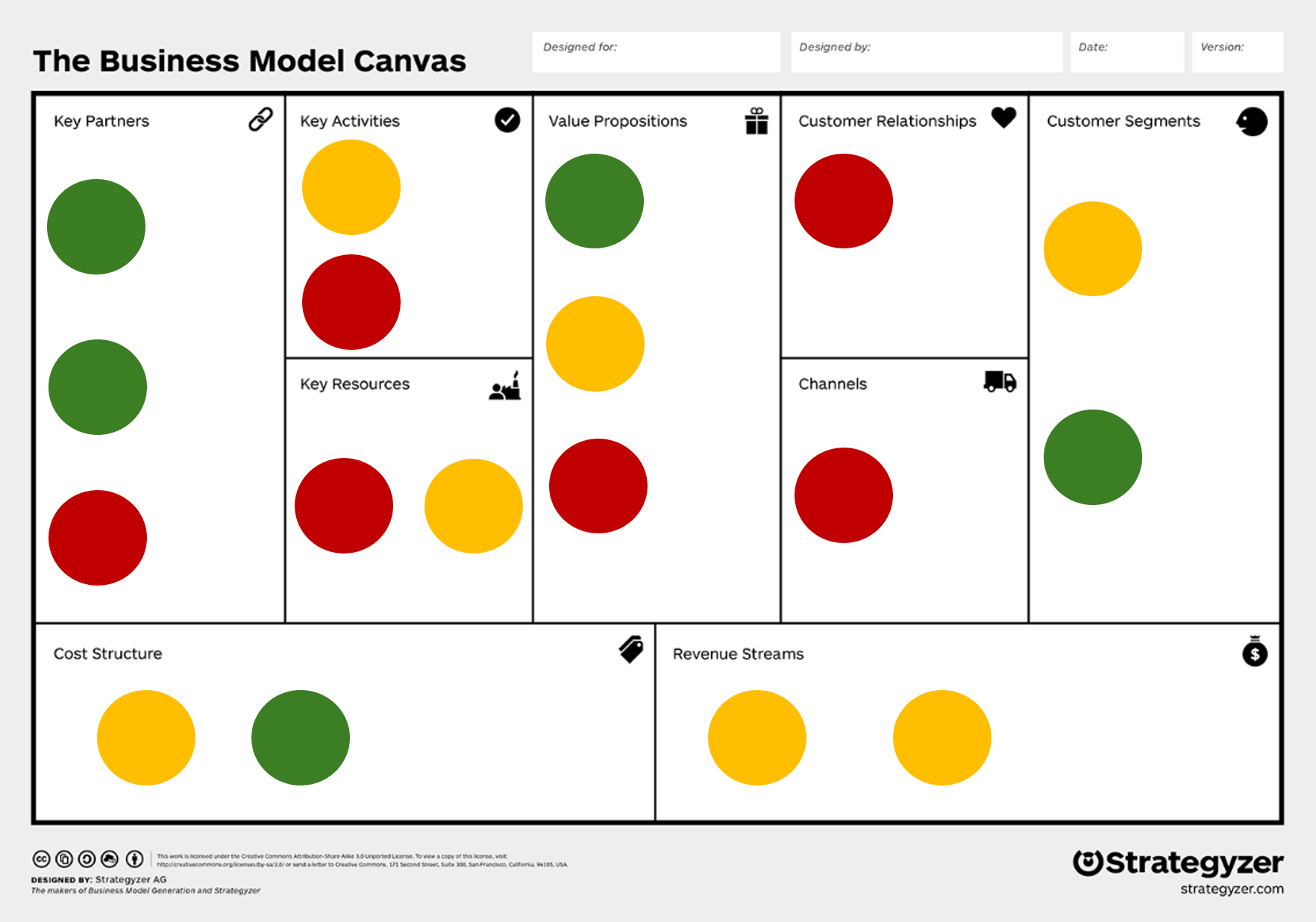
The best way of drafting your own is with a tool called a Business Model Canvas, which is like a one-page business plan.
It’s made up of nine boxes, based on those three themes, to get you thinking about how all the pieces of your business fit together for success.
Even if you’re not using the Canvas, it’s good to ask “how do other companies operate and make money?”, as this gives you some inspiration and guidance on what gives them a competitive edge.
Do you want to be like Uber, connecting two markets together (drivers and riders) and taking a cut of each fare?
Do you want to be like Keep Cup, selling a physical product that makes it easier for customers to act responsibly and avoid single-use plastic?
Do you want to be like Hilti and offer tools like a rental service, so that tradespeople don’t need to buy and own every single piece of equipment?
Do you want to be like Xero, changing the way businesses run their own accounts through clever software?
Do you want to be like Mecca, stocking lots of other brands and creating the most inviting customer experience in the mall?
There’s no one singular right way of running a business, and no business model lasts forever.
We want to understand our customer’s needs, see what it takes to make a margin, and then think about creative ways to serve the market that will make them switch away from our current competitors.
Labelling Assumptions
Rapid ideas are a great start, but they are full of assumptions.
Those assumptions are probably mostly accurate, but in startup design, one big and wrong assumption can sink the whole plan, or at least massively set us back.
The trick is to keep the assumptions clear and out in the open, not pretending that they are verified facts.
If we keep track of which elements/details are facts, educated guesses or wild speculation, then we won’t run into trouble.
We like a traffic light system:
Green dots for validated concepts
Orange dots for a work in progress
Red dots for total guesses
By keeping these clearly labelled, we avoid banking on untested assumptions, and also give credit to the parts of the model that have been proven through testing.
In the context of a startup sprint, this is particularly important when preparing for a pitch.
The audience doesn’t expect you to have resolved these assumptions, but they do assume that you’ll be aware of these assumptions.
Crunch Point: Product-Solution Fit
Another big crunch point before we start making our pitch: do we have the right offer for our customer?
Can we give them something remarkable – not perfect but at least worthy of remark?
Will this do what they need it to do?
Is the solution good enough? Is it easy enough?
If the answer is “Hell no!” then we go back to our Value Propositions.
If the answer is “Maybe” then we go back to our prototyping and validation processes.
If the answer is “Yes”, we can proceed to our presentations and action planning…

Basics Of A Good Startup Pitch
In most cases, the culmination of a sprint, hack or growth program is having teams pitch their ideas to the room, usually incorporating some helpful guest judges who haven’t seen the full development process.
These presentations, usually around 5 minutes in length, ask teams to put their best foot forward and sum up the opportunity as they see it today.
They feel rushed to prepare, but usually land much better than you’d anticipate.
You see all of the wire and sticky tape holding the idea together, but the audience just hears a new and persuasive idea.
If you only had a minute, focus on the problem for 20 seconds, the solution for 20 seconds, then a line on where the idea could go next (2-3 slides).
If you only had three minutes, focus on the problem, the customer, the solution and any traction or insights you have so far (4-5 slides).
But if you have five minutes, we’re suggesting eight slides as a structure, and each of them should have about 3 sentences of your verbal commentary.
They are not immovable but act as a good guide.
These include:
A compelling introduction (or why this needs to exist)
A painful problem statement
An interesting and exciting solution
Any customer insights or quotes to support your voice
How does the business model work? 2-3 lines, not the canvas itself
Innovative potential – how good can this get?
How will we implement it? Are we kidding ourselves?
A compelling wrap up and an ask for the audience
Eight slides in five minutes keeps the pace up, but any more than eight is a disaster.
It leaves a lot of gaps but sparks the judges’ curiosity, inviting them to ask good questions, where you’ll no doubt have good answers in advance.
The idea of this slide structure is that within 20 minutes, you have a draft that is 70% good enough.
Under pressure, 70% is great, it will give you confidence, and then you can make it stronger as you think more about each iteration.
Making It More Interesting
There’s no strict rule here, other than the good advice of doubling down on your strengths.
If you have a personal story, tell it with passion.
If you have powerful stats, use them and interpret them.
If you have a case study, make it more vivid.
If you have a mock-up or prototype, let the audience see it.
People like to be entertained, they like to laugh, and they like to be surprised.
Any addition or improvement in one of those areas will win you their attention, and that’s all you can ask of them – the idea being decent is up to you.
Anticipating Fair & Tricky Questions
Audiences should have questions – no questions shows that they weren’t paying attention.
If one person doesn’t understand something, that might be on them.
If everyone doesn’t understand something, it is on YOU to fix it.
This is why we do pitch practice, to guess what questions might arise so that you have time to prepare for them.
As someone who organises and attends a lot of pitch events, we see lots of helpful and unhelpful feedback questions.
Valid questions you can expect include:
Can you give us some examples of who would buy this?
Are you better or cheaper than the competition?
Will this be sustainable?
Is there an obvious devil’s advocate?
Why hasn’t this been done before?
What’s your advantage?
Some judges have an agenda, some judges are cynical, neither of these are your responsibility to fix.
Sometimes the best thing to do is to give a short answer and move on.
Giving a vague answer or agreeing to look into it might be better than engaging in a debate.
Where To From Here?
After a startup sprint, there’s a lot of mixed feelings and adrenaline.
The most important thing to think about is that the pressure is suddenly off, and you’re not obliged to do anything further with your idea.
But you are invited to continue in several ways.
You might pause and work on a new challenge.
You might pivot your idea to a different market or different solution.
You might double down and work on a real prototype for further exploration.
You might agree to meet with real-world experts and implementation partners to get their advice.
You might decide to get a job in another startup or scale-up, learning from another great team while you work out what to create for yourself.
Regardless of how your team went, I hope you enjoyed the process, the freedom, the pressure of making something valuable.
I hope you miss this feeling in the future, and come back to the design process with new ideas and more team members, building cool things for an appreciative audience, making rapid progress and iterating without falling in love or getting disheartened.
Our industry is full of good people who can teach you so much, and there are so many important problems in the world that are in need of a good startup.
Enjoy the process!
Cheers,
Isaac