
Building Startups Around Cynics
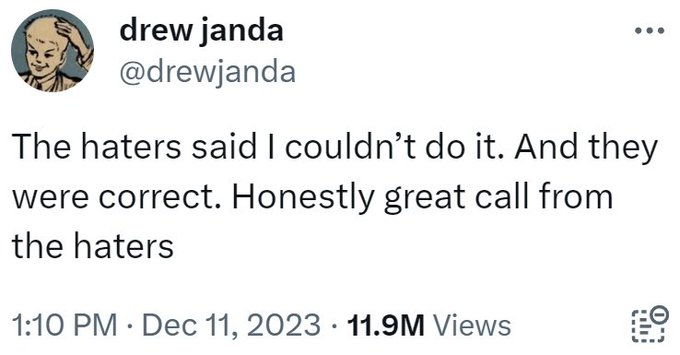
One of the most confronting things about starting your own project or business is that you expose it to the real world, and the real world will inevitably hit you with some negativity.
Negativity is not always a bad thing, it can make your work better and save you from expensive mistakes.
But it can also lead you to diminish, hide or abandon your work.
We can’t avoid negativity forever; in order for your work to reach its intended audience, it will be seen and interpreted by lots of different people, who will freely express their opinions.
We’re going to need to find a way to work with negativity, in the right times, in the right ways, exercising our own judgement.
This is something that you learn over time, but can also learn from people who have had to build something of their own.
Let’s have a look at where, when and why startups encounter negativity, and how to handle it when it comes your way…
You Work Is Of Interest To Lots Of People
And that’s a good thing – if it was overlooked and ignored, you’d have even bigger problems.
Here are some of the people who will look at you:
Customers – people making a purchase decision, evaluating their options
Competitors – rivals who are in the same market or who are competing for the same customer’s dollar
Observers – neighbours, armchair experts or other business owners who like forming and sharing their opinions, good or bad
Allies and Suppliers – people who will send you customers, include you in their plans, or sell you the components you need for your business to operate
Potential Investors – funders looking to back a successful business, offering their guidance and profiting from your success
Some of them will want to like you, some will want to be detractors and cynics, and some are open to making up their minds.
Look at any other industry or part of society and see for yourself – everything has fans, haters, curious people and a lot who haven’t really formed a perspective yet.
In public speaking, some of the best advice is to aim your presentation at the middle of these crowds – not the loyal fans and not the haters, you can’t change their minds in one conversation.
But the middle 60% of the room?
They are making up their minds, and are open to being swayed, so that’s your audience.
Win them and you have 80% support, and that’s more than enough.
For this reason, you can’t make it your responsibility to impress everyone.
Some people do not want to be impressed.

Two Types of Cynicism
Cynicism and skepticism are interesting, because they bring something very valuable and very damaging, depending on how you handle it.
This is the arms-folded stance of disagreement that assumes that everyone is a liar and self-promoter, trying to trick you for their own gain.
And you know what?
In a lot of cases, they are right.
The market is full of fluff, half-truths, self-interest and disingenuous offers.
But also, not everyone is like that, there are lots of good people in almost every industry.
So there’s two types of cynics:
1. “I won’t believe you until you prove it to me”
2. “I won’t believe you even if you prove it to me”
See the difference?
The second type are impossible, they don’t want more evidence, they will find new reasons to discredit whatever you show them.
They hate the whole field you’re a part of, you can’t convince them that you’re “one of the good ones”.
The second type will not become your customer, ally or investor.
But the first type, once won over, can become your biggest evangelists, happily telling people how their minds were changed.
This is the incentive for engaging with cynics – because it forces you to articulate the proof of your claims and views.
If what you’re saying is true and your offers are genuine, we should be able to eventually build a credible case.
You might not be able to freestyle it on the spot, but with some work and preparation you can create a compelling pitch, and that will be useful for the next 1,000 cynics you’ll inevitably meet.
What Cynics Say About Startups
The reason why this is so crucial in entrepreneurship is that you’ll inevitably get comments like:
“That will never work”
“The big boys will crush you”
“Someone else will see this and run you out of business”
“Customers will never pay $X”
“People only care about cost”
“That will never be scalable”
“That will never be investable”
Now, to be fair, those things have all been true in the past.
But usually these declarations are made way too early, with way too little context or information.
So the cynic might be right, and also wrong to say it so early and so definitively.
If you are building something innovative, expect cynics.
Your work is fundamentally built on people doing something differently, and the cynic starts with the view that people will not change, or should not change.
They will run through a mental checklist of reasons why you might be doing what you’re doing, and why it won’t work.
Sometimes they’re even doing this under the guise of helping you.

The Dose Makes The Poison
Some cynicism is genuinely helpful for you, otherwise you’d spend all your money on what’s advertised to you on Instagram.
Cynicism can stop people from falling into MLMs, get-rich-quick schemes that are too good to be true, by questioning why you haven’t heard more 3rd party success stories of people who have actually gotten rich quickly from selling to their friends and family.
Too much cynicism is poisonous, filling your mind and conversation with suspicion and negativity, missing lots of good things because you assumed they had a malicious intent.
You can end up as one of those infamous bad predictions of people who confidently declared that “no normal person would need a computer”, or that “the internet is a fad”.
We want a helpful amount of cynicism, in small doses, at the right times.
Here are some of the mixed blessings and downsides of cynicism:
Cynics highlight blind spots, pointing out consequences you may not have initially considered, or which might affect people you can’t see.
Cynics push back against hype, and that’s probably good.
Hype trains can get out of control, sweeping people up in optimism or fear, when the reality is milder and more nuanced.Cynics think everything that happens is obvious or was inevitable.
They dismiss creative genius and declare that “if they hadn’t have done it, someone else would”.Cynics dislike egos, particularly of people in power.
Again, probably a good thing.
They won’t let CEOs, politicians or celebrities think of themselves as being perfect.Cynics think other people are less intelligent than them.
A lot of smart people are cynical, but this can be conflated as “being cynical makes you smart”.Cynics prophesies failure, and failure rates are objectively high.
90% of new businesses close within five years, so statistically this is a safe prediction, but the ones that last can be enormously influential.
Your cynical friends probably dismissed or ridiculed a lot of brands that ended up becoming a part of their lives.Cynics are often wealthy, credible, and don’t appear to be overly happy.
That’s because cynicism is helpful in discernment, but it’s also a draining emotional disposition.
(I’m open to being disproven on this, I just haven’t seen look particularly happy).Cynics can drain your enthusiasm.
One of the differences between helpful and unhelpful cynics is whether they encourage you to do something else – like a pivot, iteration or experiment.
If their only advice is “stop” or “quit”, that becomes unhelpful.Cynics often struggle to coach people, change feels to unrealistic or out of their control.
Similar to the last one, they can’t verbalise what would be a better version of your inadequate idea.
They can’t define what good enough looks like, they just know they don’t like the version that’s in front of them right now.
That’s why the dose and the timing are important – negative voices can save you time, stress and money, or they can make you want to quit.
The same advice, applied at better or worse times, can lead one person to a better outcome and discourage ten others to abandon their work.
Which Cynics To Listen To?
There are lots of good people whose advice and perspective can be very useful to you.
I also do not want to commit a massive irony by encouraging you to treat every cynic with scepticism.
Here are some suggestions of who to listen to:
Everyone, once.
It’s good to be open minded and not dismiss an opinion you haven’t yet heard.
If you pre-judge someone as not being worth listening to before you know them, that’s literally prejudice.People with a track record.
If someone has a history of being right, useful or informed, they might have earned the benefit of the doubt (but are not automatically helpful).Comedians.
Speaking truth to power is a good thing, and a well-written critique helps you understand their concerns and counter-points.
A lot of people older than me would say people like George Carlin are the best examples of this.
Today I’d say Bo Burnham, Jimmy Carr and The Betoota Advocate are doing something similar.People who can point to evidence.
Good evidence should help change your mind.
If it doesn’t, what does that say about you?
One piece of evidence does not destroy an argument, but it does mean you should look at the situation closely.People who are still encouraging and nudge you forward.
These people are great because they show you through their actions that they are trying to help.
The word trying is important, it might be unhelpful and you should steer away from them, but the intent is there.People who have had experience with cynicism themselves.
This is what’s great about talking to people older than you, they’ve had to work through similar dilemmas in the past, and can speak to times where they’ve changed their mind, or stuck to their principles.People who can articulate a counter-offer or alternate course of action.
Counter-offers are great because they show that we want the same/similar ultimate goals, and are now debating how we get there.People who have built something.
Builders and creators are usually less cynical, or they’re cynical for good reasons, and have first-hand experience.
They are often more nuanced and sophisticated in their concerns.Judges in pitch competitions.
If someone hears your pitch and doesn’t understand, that’s on them.
If lots of people don’t understand, that’s on you to improve for the future.
They’re often picking a top 2-3 presentations, and this shows you where your pitch sits in relation to your peers.Funders and investors
While they can’t predict the future, seasoned investors can speak with clarity about the past, what’s worked and where they see red flags.
They also usually have lots of options for where to put their money, so they can tell you why they’d pick another opportunity over yours.

Which Cynics To Brush Off?
Some negativity is just plain unhelpful.
This is either because it’s wrong, out of context, or actively designed to make you stop what you’re doing.
Here are some suggestions of voices to tune out:
People who will never be an intended audience for what you’re doing.
If they will never be in the market, or aren’t close to any of your potential customers, then of course they won’t understand.People looking to be offended.
Sometimes people want to find a reason to quieten a new voice by disqualifying it.
By all means, check that you’re not being offensive, but you can’t stop some people from being offended.People whose minds cannot be changed when presented with their requested evidence.
A great question to ask is “So if I could show you _____, would that change your mind?”
You’d be surprised at how often their answer switches to needing to see additional proof.People who are cynical about everything.
They say “if everywhere you go smells like shit, check your shoe.”
Some people like being a cynic.People who find your work threatening to their status quo.
This can be rivals, competitors, or even family members.
If your work forces them to change, they’ll try to stop you or slow you down.People who do not have empathy for your audience and end user.
It is almost impossible to design for someone you dislike or are apathetic towards.
If someone treats your target audience as being invisible or worthless, don’t take their design advice.People who have a goal of getting you to stop, or to be less successful than them.
This one stings.
Some people do not like seeing you be more successful than them.
Some of these people might be in your close circle.
If this is your situation, I bet you’ve already pictured who we’re talking about.

Good Questions For Discerning The Difference
There are no strict rules, but these questions can help you sort through murky situations:
Where is their perspective coming from?
Is this a matter of taste, like how some people dislike your favourite movies and music? Or is this a matter of fact?
Is your scenario fundamentally different to the one they were familiar with?
E.g. you’re in a different market, and you’re a different entrepreneur?Does this person have my best interests at heart?
Do they already dislike me, or what I represent?
What would make this person feel comfortable? Testimonials? Stats? Academic Research? Happy customers? Pre-sales? Enthusiasm from other investors?
Does my work, by its nature, make this person uncomfortable?
Would their peers and colleagues agree with these sentiments?
What’s their plan B? What’s their suggestion?
How can I find out more?
What test or experiment could we run next?
What’s great about these questions is they open up the possibilities of new perspectives, without automatically accepting them as a threat.
We can learn more, without jumping to conclusions.

Grounding
Rather than sticking to one goal or one vision, it’s helpful to have a “source of truth” than can validate or invalidate your ideas.
These might be a group of customers, advisors or honest friends who can give you valuable feedback.
They can tell you what they think about your competitor’s products/services, they can use your prototypes and show you what they like/dislike.
It might be a cause that you care about or a group you’d like to serve, giving you a reset from your scepticism and reminding you why you’re designing in the first place.
This prevents you from having your confidence totally shaken by one interaction or conversation – if a piece of criticism is valid, it will still be valid in a week.
That helps you avoid making decisions when you’re sleepy, hungry, rattled or in a weird headspace.
Thicker Skin
There comes a point where you might need to intentionally develop thicker skin, accepting that a lot of people will not “get it”.
That means being comfortable in disagreeing with people.
That means being comfortable in being ridiculed by people (especially online, fewer will say it to your face).
That means accepting that some people are at a very different place with entrepreneurship to you, and their perspective might have nothing to do with you.
It is not your responsibility to prove anyone wrong, although this can be incredible fuel for the right mindset.
There is no guarantee that playing it totally safe will please cynical people, they may see your entire genre or generation as being wrongly motivated or doomed.
If that’s the case, all you can do is accept that they aren’t going to be a good reference point as you build your business.
Small Doses Make You Stronger
It’s helpful to deliberately engage with the “no” voice, to hear the “Devil’s Advocates”, to see how strong their case is.
Usually, there’s some validity.
When you’re ready to hear it, you can engage, take some of it on board, or add some finesse to how you pitch a story and serve a customer.
Then, go back to blocking these voices out while you build, then test again when you’re ready.
Daily discouragement is like a stone in your shoe, better to get the benefits in short bursts and then get on with the work.
Finally, I’d encourage you not to be a constant cynic in your relationships.
It’s helpful in bursts, but then find reasons to be positive and encouraging in the majority of your conversations.
We value honest friends, but don’t be the person people hesitate to share their news with because they know you’ll dump all over it.
A neat trick is to use the “Yes If” or “Can If” approach, articulating what you’d want to see/know to be persuaded on an idea, rather than listing reasons why it won’t work.
It still might not work, but at least you were working towards a possibility.
Because as George Bernard Shaw said:
“People who say it cannot be done should not interrupt those who are doing it”.